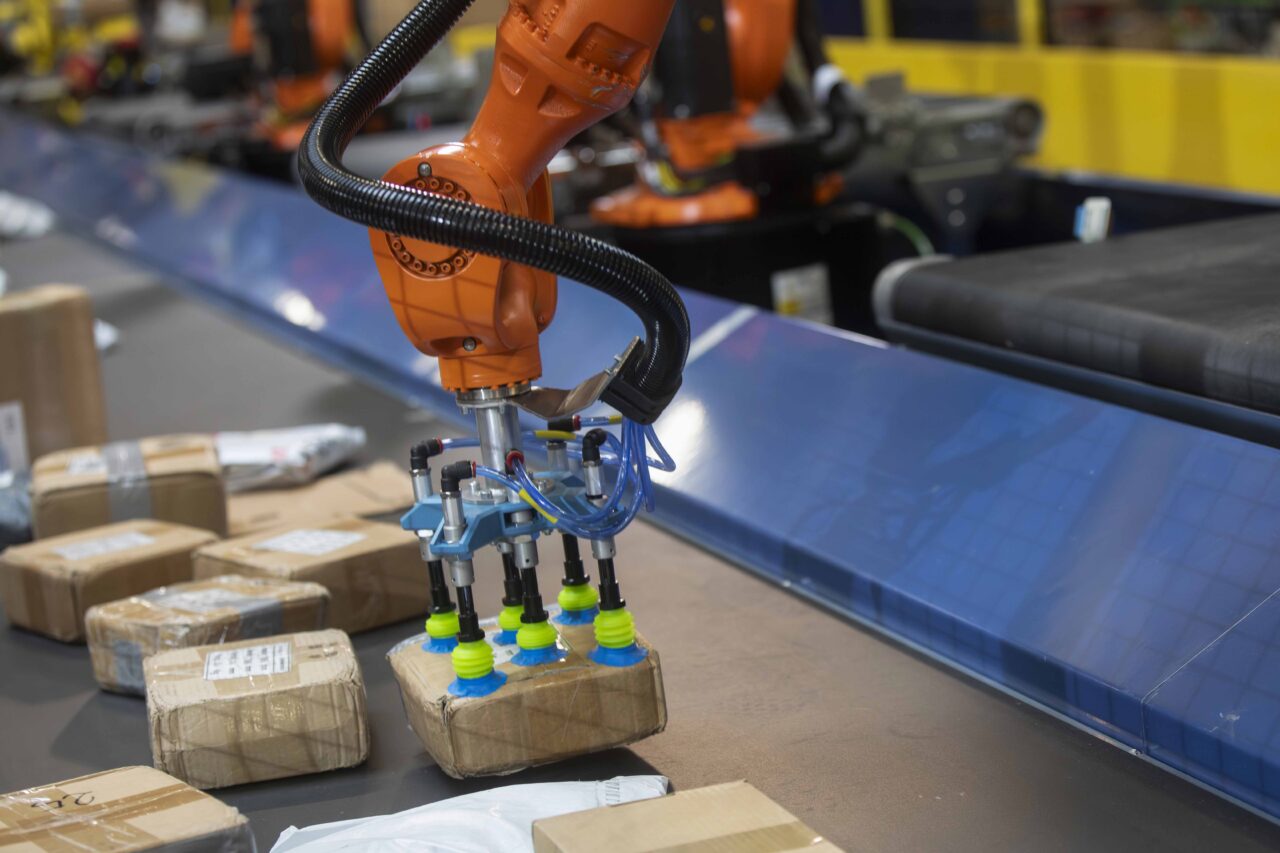
Automated solutions typically combine AI vision systems with robotic arms and suction grippers to identify parcel positions and move individual items into the correct orientation.
For CEP operators, maintaining a consistent parcel flow helps prevent downstream conveyor jams, maximise sorter throughput, and improve efficiency across the entire operation.
3. Automated parcel induction for sortation
This is one of the largest applications of robotics in parcel logistics. Rather than manually placing parcels onto a sorter, robotic systems pick individual parcels at high speed and place them onto cross-belt or tilt-tray sorters for sortation.
Vision systems identify each parcel’s optimal pick point and dynamically feed parcels onto the sortation system.
For operators, automating induction helps maintain sorter throughput, reduce handling errors, and process a wide variety of parcel sizes and shapes more consistently, particularly during periods of high demand.
4. Mobile robots
Autonomous Mobile Robots (AMRs) and Automated Guided Vehicles (AGVs) are used to transport parcels, pallets, and roll cages throughout parcel hubs.
Unlike fixed conveyor infrastructure, these mobile robots can move between operational zones, transport buffers, feed sorters, and support cross-dock operations using autonomous navigation technologies.
Their flexibility allows parcel operators to adapt layouts (space permitting) as operational requirements change. They can also include forklift traffic, and provide a scalable alternative to installing additional fixed conveyor systems.
5. Robotic palletising
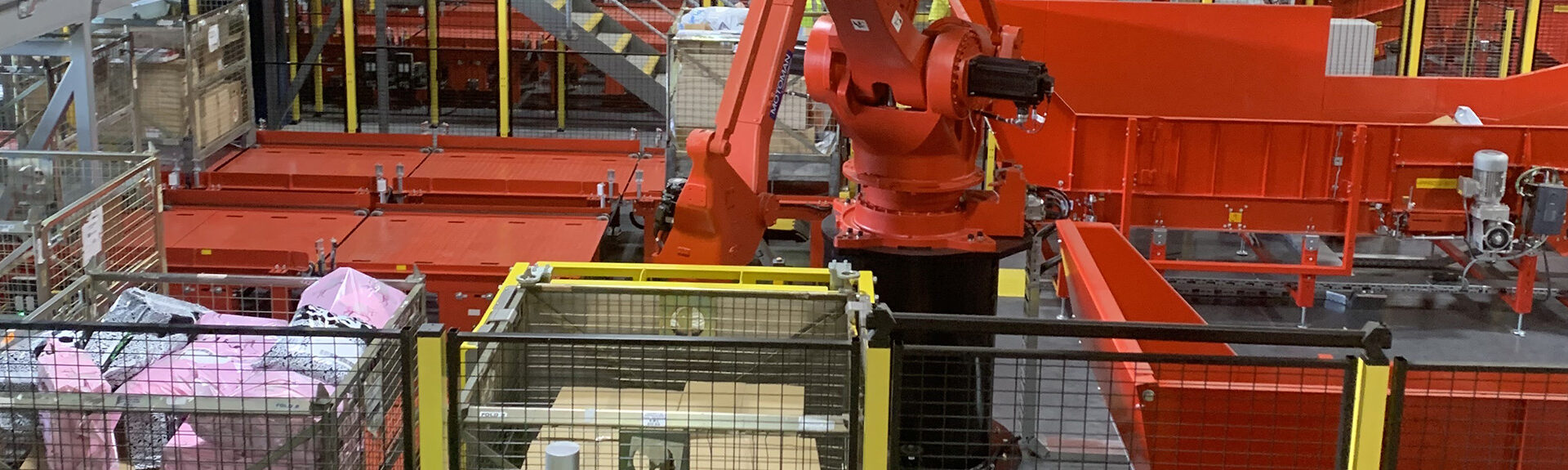
Preparing outbound shipments often involves manually stacking parcels onto pallets, roll cages, or containers. Robotic palletising automates this task using robotic arms capable of handling mixed parcel sizes while optimising stacking patterns and weight distribution.
Using vision systems and intelligent software, these robots can build stable outbound loads that maximise available trailer space while ensuring safe handling.
The result is improved trailer cube utilisation, faster dispatch preparation, and reduced ergonomic strain on staff working in areas with repetitive lifting tasks.
6. Exception handling
Not every parcel can move smoothly through an automated sortation system. Oversized items, damaged packages, leaking parcels, unreadable labels, and other non-conveyable items often require manual intervention.
Robotic exception handling systems use vision technology, AI, and robotic picking to identify these parcels, isolate them from the main flow, and direct them to the appropriate handling process.
By automatically removing problematic parcels before they disrupt the parcel flow, CEPs can reduce manual intervention, improve operational resilience, and minimise the risk of downtime that impacts the overall production and throughput.
7. Route sequencing for last-mile delivery
The final stage before dispatch is preparing parcels in the order they will be delivered. Robotics can automate this sequencing process by arranging parcels according to delivery routes, stop sequences, or delivery waves before they are loaded onto vehicles.
These systems combine robotic handling with route optimisation software to organise parcels in the most efficient loading sequence.
Preparing deliveries in route order reduces loading time for drivers, shortens time spent on the road, and supports more efficient last-mile operations.