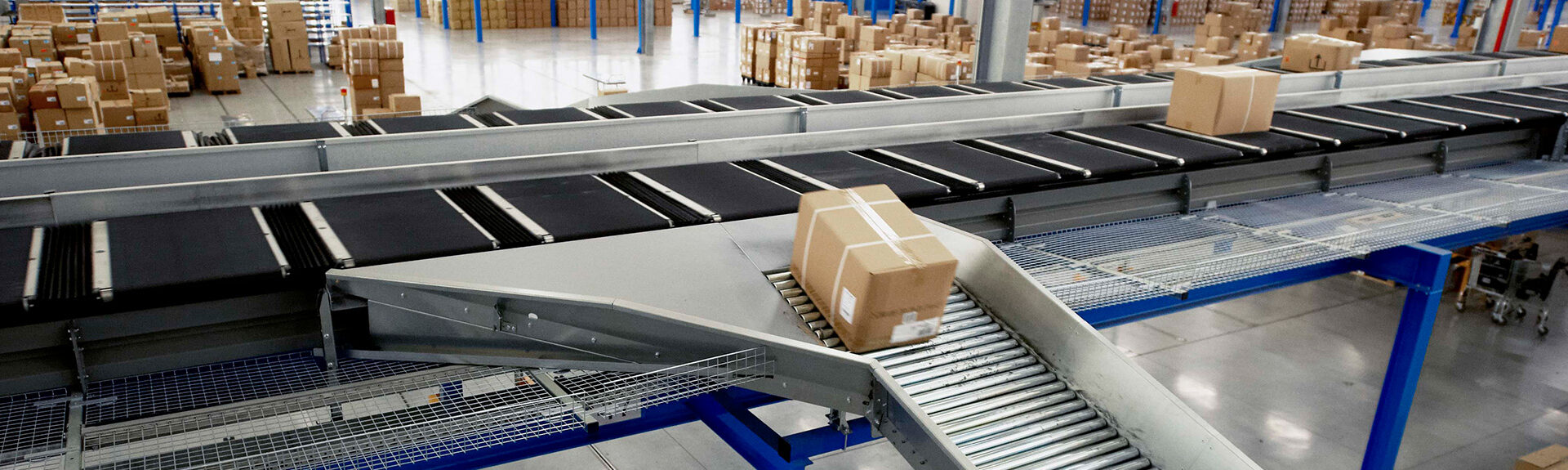
System modularity is how operational scalability becomes accessible in warehouses, as different elements or modules can be added on or adapted as necessary. Scalability does not always require robots, however. Fixed automation can scale in a variety of ways, for example by adding discharges to sorters, or adapting chutes to redirect items so they can accumulate elsewhere when surges occur. Similarly, using a pouch system can provide an in-system buffer to store items which is helpful for managing reverse logistics in a limited space.
SUCCESSFULLY MANAGING VOLATILITY THROUGH SOFTWARE
Alongside adapting the tasks that happen around the system hardware, adapting the software is another way in which warehouses can better manage volatile spikes. Traditionally, software connected to automated systems has been programmed to one template – which perfectly fit the necessary and predictable needs of the company at the time.
Making small edits to this software can be a way to cope with unpredictable changes in orders, for example so that an item goes to a different sorter or shipping area when there is a spike in orders. The software could also be set up so that there are multiple programmed templates, meaning there is a regular setup – for example, where 80% of the goods go to the store and 20% go straight to delivery – and then a surge setup, which might see 60% of the goods going to the store and 40% for delivery.
Whatever the numbers look like, the ability to make edits to the software can allow companies to quickly switch the template when there is demand. As a result, they can work effectively despite an increase in orders – and rapidly adjust again when the surge is over.
THE FINANCIAL ASPECT OF MANAGING VOLATILITY
One of the difficulties with volatility is how to plan for it – while systems need to be flexible, it’s a tough decision to consider just how flexible they need to be. At the heart of the covid lockdown, systems needed to have much more capacity, but the volume of online orders was never going to stand at that rate once the world got back to normal.
It can be challenging for companies who want to have a flexible system to understand how to do this without spending money on automation that will not receive full utilisation. The nature of a spike is that it does not last forever, so companies may be wondering how they can plan to manage volatility while ensuring they are not overspending.
When investing, it’s necessary to consider the amount of flexibility that the warehouse needs. For a futureproof solution, it’s useful to consider how much more capacity is needed based on the data. Understanding the actual need for system throughput is essential and often, the cost difference between purchasing something that provides 10% and 20% extra is minimal.
While taking the investment decision, it’s also worth considering the cost to the company that comes from being unable to deal with volatile spikes. Where rigid systems lead to difficulties, this has a knock on effect of costly underperformance, deliveries being slower, workers being more fatigued, more errors being made, and shipments arriving too late – all of which impact the customer experience. All these things cost the company, even if it is not shown as directly in the budget.
For insights into whether this is an issue, look at the data in the KPIs. When a warehouse is struggling, the KPIs are not being met, which means it might be the time to take a financial step towards adapting the system to make it more flexible. For example, if the time to fulfill is normally at three days and it is taking longer, then it is an indicator the system cannot cope with the volume. Whatever individual KPIs are, the data around them will give indicators about where there are difficulties and these are an important point to address.
TAKEAWAY
Warehouses need to be flexible to cope with demand surges, and the best way to do this is to ensure that material handling capacity expansions work flexibly around the original systems.
Considering both hardware and software is important, as they both offer ways to adapt a system to ensure it is still the centre of operations, but can be scaled up or down according to need without there being a significant impact on the company.
Whether it’s adding more robots, increasing manual help, changing sortation options or investing in a software with multiple sort templates, flexibility should be at the heart of the decision.
While it is unclear which new trends will take the internet by storm in the next years, or which products will suddenly and unexpectedly become must-buys, it is clear that the warehouses that will successfully ride the waves of volatility are the ones who have adapted their central automated distribution system with scalable modularity. The flexibility this brings will allow them to smoothly handle these surges and be unswayed by unpredictable events in the future.