Rethinking a linear system to optimise efficiency
A modern automated system can be the update that security screening needs – crucially, it isn’t a case of providing one element that is faster or better, but rethinking the system entirely to remove the limitations of a linear process, which stay present even with more efficient scanners or more queues opening up.
One example of what a modern automated system can look like is a model that reconfigures the passenger flow and centralises functions in order to take the screening process from a linear to a parallel system.
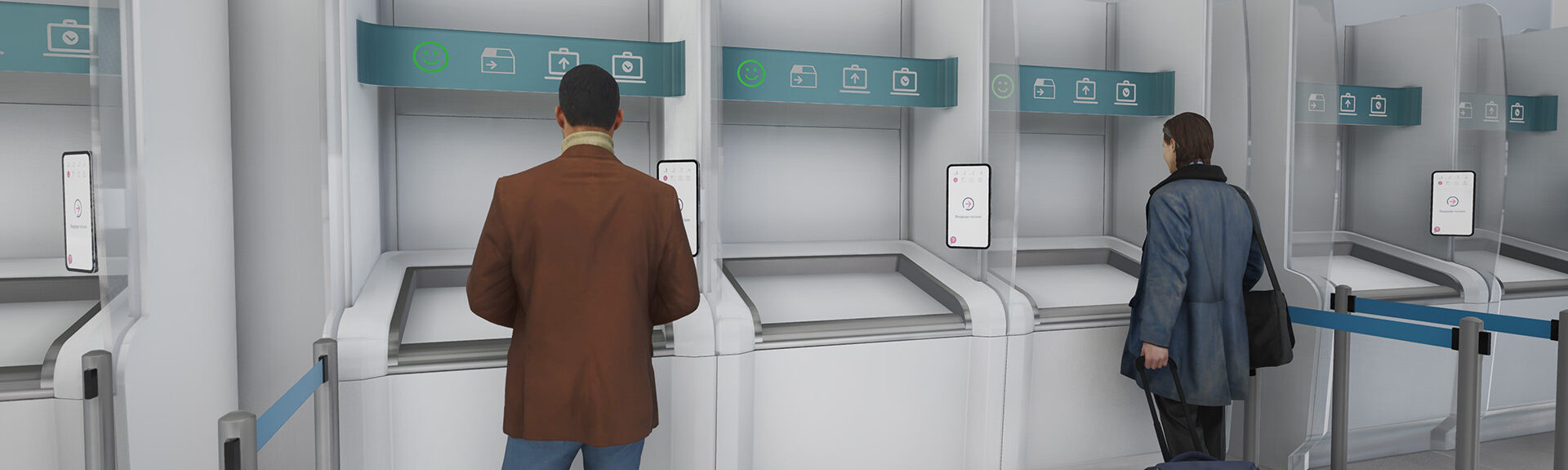
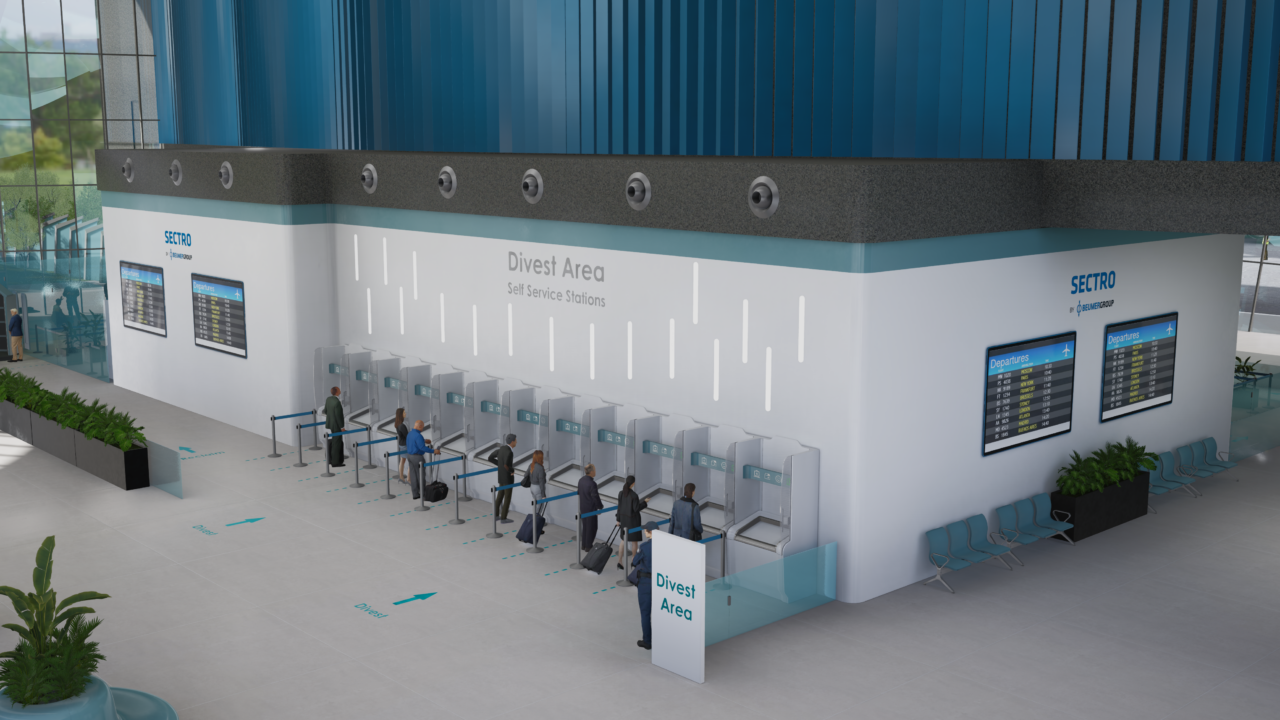
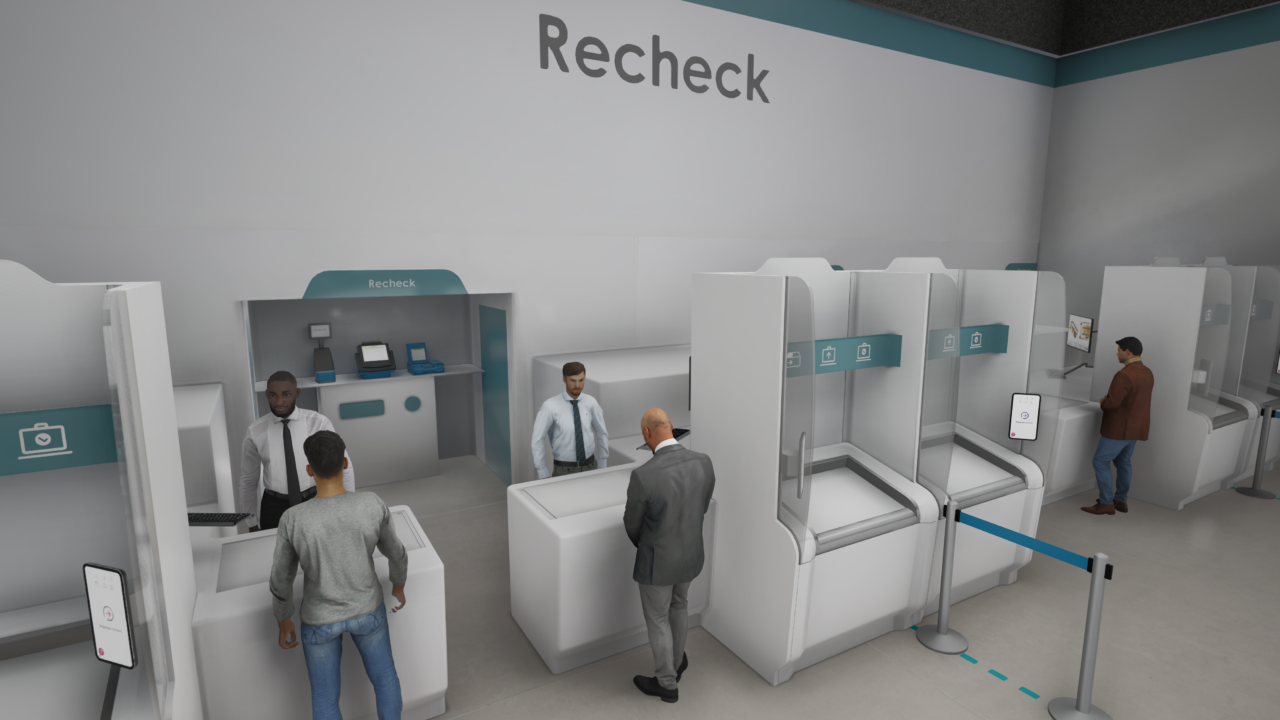
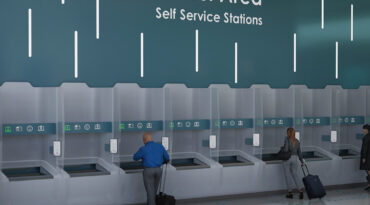
The system works by having self-service stations in the divest area where passengers themselves are responsible for the simple process of placing their baggage in a single large tray and connecting it to their biometrics. While the passenger walks through the body scan monitor, their baggage is being routed to a centralised system, which scans it and sends the images to a central control room. If the baggage is acceptable, then the passenger is directed to a reclaim station where they use their biometric ID to receive their belongings. If the baggage requires further investigation, the passenger is directed to a dedicated recheck area with operators.
As this process is not linear, a significant number of the difficulties are overcome and a host of benefits provided in their place
Smarter imaging and screening technology increases security
Modern automated systems feature next generation scanners – ones that make use of CT imaging and smart intelligence to streamline the process. Scanner images are sent to a centralised control area, allowing better control and recognition for faster processing.
As the control room is located away from the scanners, this allows better concentration and more ability to spot risks – helped by the algorithms used.
Personal verification is stronger with biometric identity
Biometric validation has already begun to be used in airports, for example in passport gates, meaning that passengers are becoming familiar with biometric verification in airports. Extending this to the security screening process allows an extra stage of security and certainty around the passenger screening.
Rather than needing to spread all their possessions, including valuables, out across multiple open trays, passengers can deposit their belongings into a sealed box which responds to their biometrics. This means that there is certainty that only they can open it when it has passed through the system – and no one else can. A significant cause of stress is removed from the passenger experience and the whole process is more seamless. Relying on this form of validation provides a more secure experience for everyone involved without adding any excess time.
Passengers feel more in control with self-service processes
Airport passengers have already shown that they respond well to self-service processes, such as with self-drop baggage systems. Allowing passengers to manage the security process by themselves removes the common difficulties and stressors. Individual stations remove the linear queues, reducing frustration and bottlenecks. Passengers feel less frenzied panic as they attempt to remember what to take off or are frustrated by reminders of things they already know. Instead, passengers can take their own time – however long or short that may be.
While this reduces stress for passengers, it also removes pressure on airport staff as a centralised system does not have belts which require manning, only self-service kiosks. Instead of each station being manned, there can be several staff waiting to assist if necessary in the same area, meaning that the operational costs are 30% lower due to the area-specific manning setup.
The process itself is smoother and more streamlined
Passengers have long been frustrated by the security process, and incremental improvements haven’t made a significant difference to alleviate stress and frustration. By transforming the process, it creates an entirely new experience for passengers – one that is not associated with frustration, long queues, and frequent flyers held up by leisure passengers. As a result of a new passenger flow, there are significantly less bottlenecks.
Reduced waiting time has a positive impact on passengers, with security screening no longer being something that is to be dreaded, but instead seen as just another stage of the journey. Better queue management and space optimisation around the security screening also creates a more pleasant environment for both passengers and airport staff.
A better integration of security to the terminal layout
The limited nature of terminal space has contributed to the difficulty of the security screening process, as the space can feel as though it is not big enough, people are crowded together and this adds to the stress of the environment. With a modular design, such as the one offered by modern systems, airports can manage the design in a way that suits them, ensuring that there is plenty of space and less bottlenecks.