


Cross-border CEP is entering a new era of complexity
The growth of international e-commerce and new EU legislations are reshaping compliance, capacity, and competition in 2026.

The growth of international e-commerce and new EU legislations are reshaping compliance, capacity, and competition in 2026.
Disclaimer: This text was originally written in English and translated using AI.
The rapid rise of overseas e-commerce is transforming parcel logistics and intensifying pressure on CEP operators already working in a complex environment.
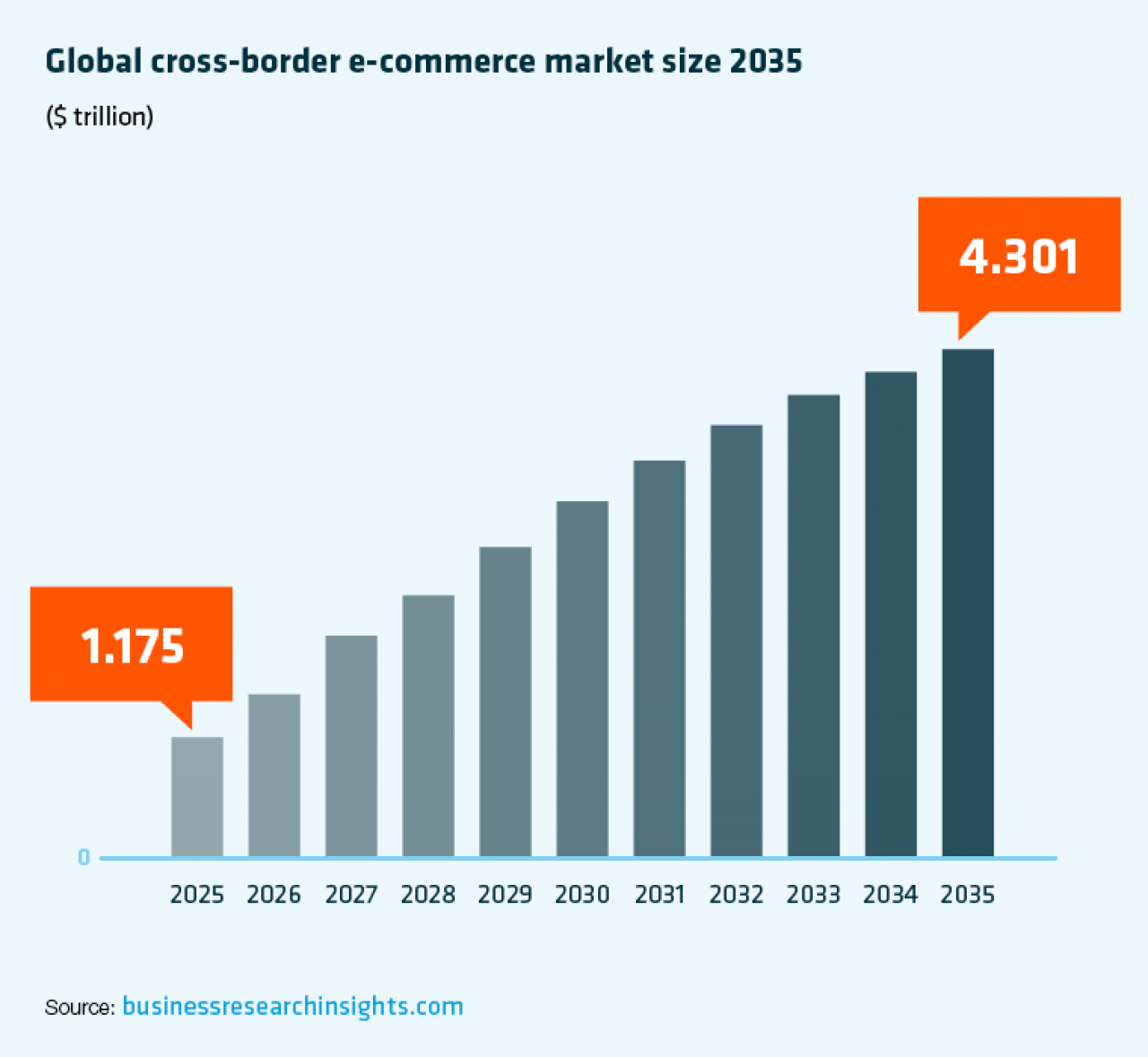
According to ECDB report ‘Cross-Border eCommerce 2025’, the market grew by $100 billion in 2024 and is expected to grow by the same amount in 2025.
Europe remains the world’s largest cross-border region. In 2024, European e-shoppers spent $504 billion overseas in 2024, which was an 88% increase on 2019’s figures. The UK, Germany and France led the market, with most purchases coming from US and Chinese vendors.
However, spending in Asia and the Americas has been rising since 2019, signalling the long-term globalisation of parcel flows and sustained double-digit growth in the decade ahead.
Despite the strong demand, many CEP networks in Europe are struggling with the surge in small, low-value parcels. These ‘smalls’ require intensive customs handling, yet most systems were not designed to process such high volumes efficiently.
Customs handling remains one of the biggest bottlenecks. Above certain thresholds, parcels require declarations, tariff code identification, duty estimates and pre-arrival data. Manual processes often lead to inaccuracies and delays – especially for semi-automated networks.
Operators using digital pre-clearance, automated code identification and AI-driven customs tools see far fewer delays. DHL’s digital customs platforms demonstrate that digital-first models offer a clear operational advantage.
To learn more about the customs challenges, and how digital tools can overcome them, download our new industry report, ‘Courier, Express and Parcel 2026 Outlook: The interconnected challenges’.
New EU legislation aims to simplify the handling of low-value e-commerce goods and reduce bottlenecks at major European entry hubs. Key measures are expected to include:
Belgium – processing an estimated 1.4 billion imported parcels in 2026 – has indicated it may adopt the flat fee ahead of EU-wide implementation, underscoring the urgency across the Benelux hubs.
While the reforms will not eliminate all customs challenges, CEPs with strong data capabilities and automated workflows will benefit most once the new rules take effect.
Technology alone will not solve cross-border complexity. Many CEPs are strengthening their position through strategic partnerships and acquisitions.
Recent examples of this include Aramex acquiring MyUS to expand its US presence and improve its MENA cross-border capabilities, and bpost acquiring Radial to enhance its US fulfilment capacity and demonstrate how postal and courier operations can reinvent themselves through international expansion.
These moves reflect a broader shift toward hybrid operating models that combine global technology platforms with local market expertise.
As cross-border e-commerce becomes the norm, competitiveness will depend less on network scale and more on how effectively data, partners and operations integrate. Four priority actions stand out for CEPs navigating rising cross-border volumes:
To learn more about how CEPs can stay competitive across borders, download the BEUMER Group’s Industry Report 2026 Outlook, ‘The interconnected challenges’.