Home > Knowledge > Airport > Solving common difficulties in baggage make-up

Solving common difficulties in baggage make-up

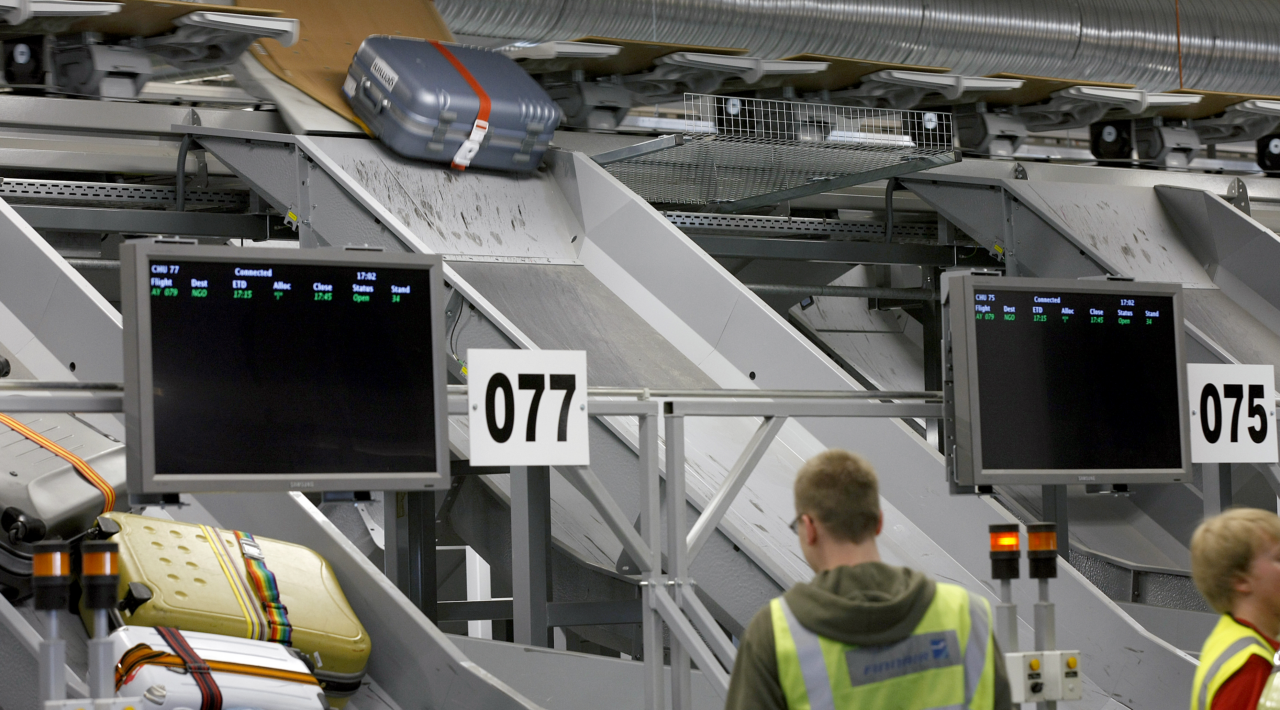
Baggage sorting and makeup happens largely behind the scenes, as the baggage is sorted into the correct destination and compiled for transport to the aircraft. Although this is largely unseen, it is a process that requires a significant amount of resources and places a fair amount of stress on those involved. 

Disclaimer: This text was originally written in English and translated using AI.

Article summery

  • Airports face persistent baggage make‑up challenges including limited space, strict labour regulations, and ongoing shortages of manual baggage handlers.
  • Shifting from traditional drip‑flow handling to a batch‑building philosophy enables better control of baggage movement, reduces manual labour, and minimises human error without requiring major infrastructure changes.
  • Semi‑automated solutions such as Manipulators significantly cut heavy lifting, speed up loading, and reduce space requirements, while fully automated robotic systems offer continuous, consistent, error‑resistant operation.
  • A modular, step‑by‑step modernisation approach—starting with individual build cells—allows airports to improve capacity, efficiency, and future‑readiness without disrupting existing workflows.

While the process has long been determined by passenger flow and when the baggage is checked in, these conventional routes are no longer the only way. Rethinking the way in which makeup is planned and executed can alleviate some of the common difficulties faced in makeup – and, crucially, allow this to happen in a way that fits an airport’s needs, investments, and future plans.

Baggage make-up faces three major challenges

As baggage makeup traditionally exists, it is a process that occurs in a limited physical space, for a very limited amount of time, and requires a significant amount of physical labour. Intrinsically, this setup is rife with difficulties.

The first and most significant challenge that is faced by baggage makeup is space. Even the largest airports have a limited area available for makeup to occur, and with a significant amount of baggage to be moved in tight time frames, baggage handlers can struggle in the space provided.
Where they are making up baggage for multiple flights at timings that are close together in areas that are also close together, not only does it become more stressful, but there is also a higher risk of human error and baggage going to the wrong place. Most airports do not have capacity to build further or extend the makeup hall, meaning that there have previously been limited ways to effectively manage within such a constrained space.

Alongside this, baggage handlers are impacted by the regulations of the country where they are working. Highly regulated countries in particular can result in significant limitations. Baggage makeup requires a significant amount of lifting, and as health and safety regulations change, they can limit the amount baggage handlers are able to lift in a day, or how long they can work without a break. Although this is not yet relevant in every country, the likelihood is that the regulations will continue to impact more and more countries. More baggage handlers are then needed in order to maintain the workload, and sourcing this labour can be difficult.

Finding sufficient labour for baggage handling is the third challenge that commonly causes issues in makeup. As the work requires manual tasks, the baggage handlers must use physical labour. There are several difficulties that come with this – it is not a job that people stay in for a long time, meaning there is a high rate of staff turnover, and it is prone to human error as mistakes can be made. Since the pandemic, there has been a surge in jobs that can be done from home, meaning airports are facing significant labour shortages.

Rethinking the baggage flow can remove make-up difficulties

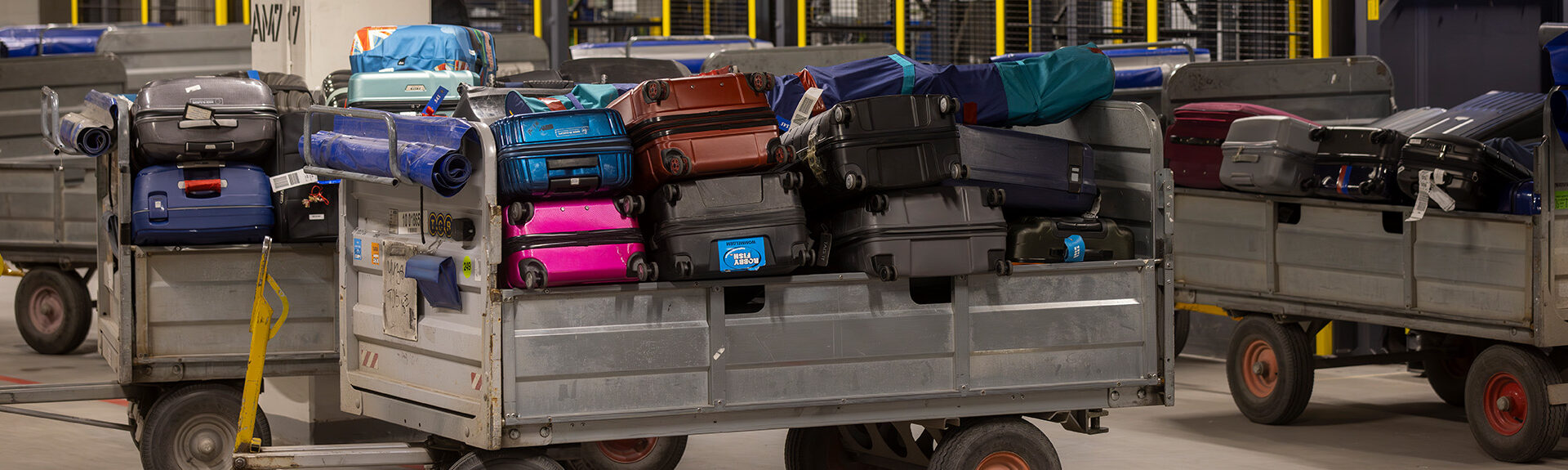
One way to remove the difficulties within make-up is by reframing how baggage handlers work. The traditional philosophy of sortation and make-up is based around when baggage appears in the hall, with the drip flow of baggage determining the next step of baggage-handling. Baggage handlers fill containers or carts as baggage appears, which necessitates a significant amount of walking around and moving heavy baggage.

While these issues may seem intrinsic to baggage handling, there are some ways in which they can be removed. One of these is batch building (link to AP BP A1 – 2026.01 – Batch build-based make-up) – a different philosophy for managing sortation flow, so that it is controlled by departure time slots rather than by passenger flow. At its core, batch building involves storing the baggage and releasing it in batches based on different criteria, such as the flight they are for, and then moving them in these same batches. It does not require a change to physical installations, just a change to the philosophy and means as to how the baggage is controlled in the make-up hall.

The conventional model for baggage flow involves loose baggage handling, a large amount of physical labour, and a manual build-up of bags, all of which add pressure to the resource challenges already being faced. Adopting a batch building philosophy removes these constraints while also offering a basis that, with added automation, can remove the intrinsic difficulties mentioned above.

A process that sets up for automation

By rethinking how sorting and makeup occur, airports can achieve more and work in a more effective manner within these constraints. Using batch-building as the core philosophy, automation can be applied to the process in two ways to garner even further benefits.

1. A semi-automated approach with a Manipulator

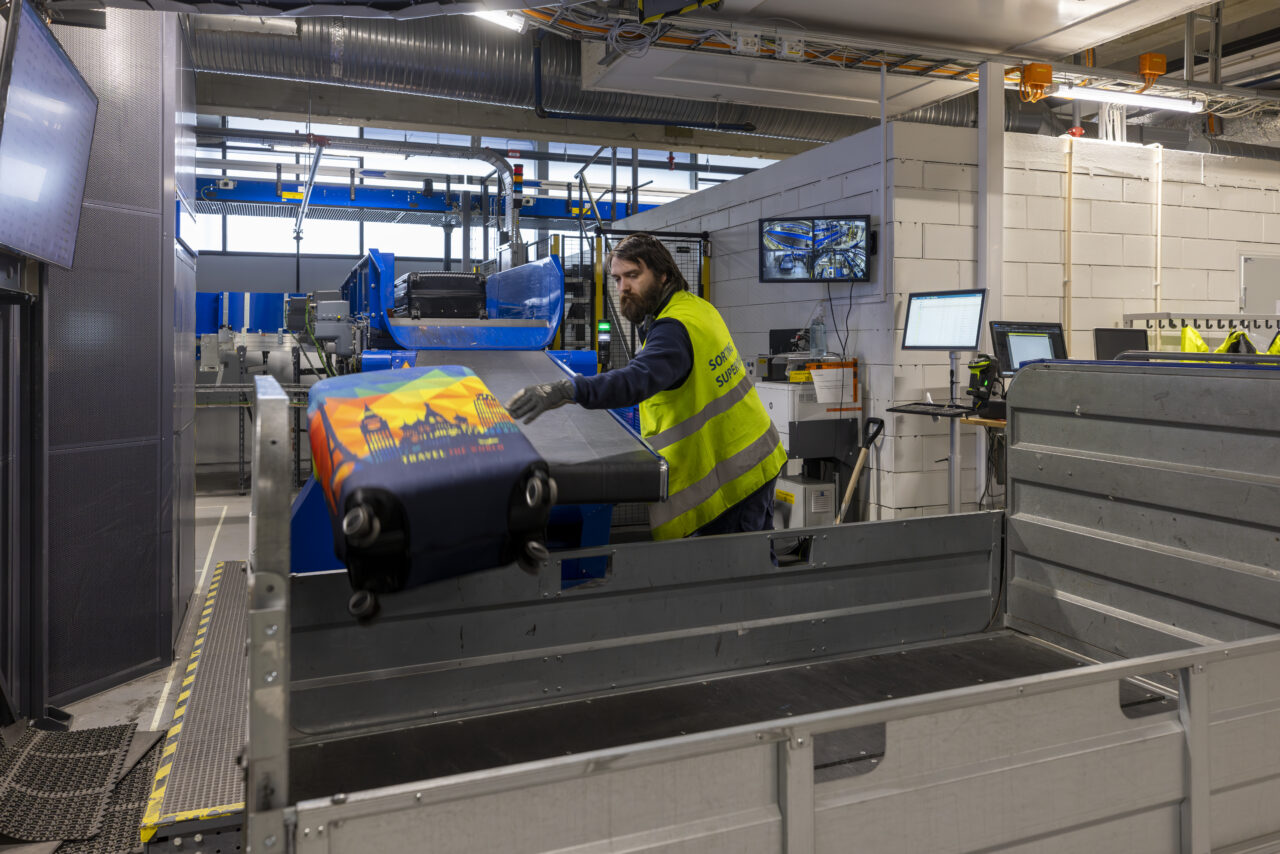
Semi-automated batch building makes use of a Manipulator to save human labour. Instead of requiring the bags to be lifted as they are sorted, they are automatically transferred with the Manipulator, which is controlled by a joystick, meaning that the heavy lifting needs are removed and the process is much more rapid.

Without so much manual labour needed and due to a batch being transferred at once, a baggage cart can be filled in just five to six minutes, providing a significant efficiency gain. It also provides better working conditions for the baggage handlers who are operating a joystick rather than doing a significant amount of heavy lifting.

The Manipulator also provides a greater capacity for space, as it can replace 40 sort positions with 4 build cells where the batch is transferred to the ULDs/dollies, meaning that space is saved in the make-up hall. The build unit is thus built more quickly, with less human physical labour, and in less space.

Applying a Manipulator to batch building ensures better conditions and up-skilling for baggage handlers, removing the challenges of physical labour that must comply with regulations, and ensures faster and more accurate loading.

 2. Fully-automated make-up with robots

Fully-automated make-up follows the same philosophy as the semi-automated process, but uses robots instead of the Manipulator, meaning that there is no joystick operation. Instead, the work that is done by the Manipulator is performed by robots The robots can run continuously without any intervention, and do the loading, clear errors, and resume operations.

This offers the same benefits as the semi-automated manner, and also additional ones in terms of consistency. As it is entirely robot controlled, it can run for longer amounts of time and provides a more consistent service, while freeing up baggage handlers to work on other tasks. It brings stability and a more trustworthy way to handle baggage with less risk of human error.

As baggage handlers have a high rate of turnover within their work, using robots ensures that changes in staffing have a minimal impact in the make-up hall as the robots can run continuously despite changes.

Modernisation can happen in small stages

Baggage makeup has always worked in a conventional manner, and proposing an entirely new philosophy may be daunting. One of the best ways to modernise the make-up hall is bit by bit, taking a modular approach rather than a complete overhaul, for example by adding in one build cell to replace 10 laterals.

This in itself goes a not insignificant way to improve on the constraints felt from conventional makeup. On top of this, it ensures that there will be no impact on the workflow as new methods are adapted to, providing certainty that baggage will continue to be transferred as usual.

A hybrid and linear approach may also provide sufficient relief to the make-up hall that just one build cell is needed – it’s all about what works for each individual airport. Whether that’s a hybrid version, a semi-automated, or an automated version, the beginning of the modernisation is rethinking the baggage flow for greater control.

Takeaways

Baggage make-up faces challenges that cannot be avoided, they can merely be worked around. Within the constraints of the makeup hall, there are ways of doing more with what’s available. A batch building philosophy for sorting and makeup is an effective way to do this, as it avoids some of the main challenges that are being faced in this area.

Batch-building is one example of a philosophy for sorting that allows for further development later on, meaning that even if an airport is not yet ready to add more automation or robotics, the setup functions in a way where they can easily be added in at a later date. This marks a significant change from the conventional linear processes that struggle to cope with increased demand – even with limited space, a batch building setup can use automation to further increase abilities.

It’s a flexible way to remove some of the main challenges in make-up while also preparing your airport for the future.

Subscribe to our newsletter