
The state of robots in CEP in 2025
For many years, companies in the CEP industry have been dreaming about robots and the promise they offer for making distribution centres safer, more efficient and providing increased capacity to handle parcels.
For many years, companies in the CEP industry have been dreaming about robots and the promise they offer for making distribution centres safer, more efficient and providing increased capacity to handle parcels.
Now, the reality is that robots can be an important part of the logistics of CEP. However, the sci-fi predicted robots of the future, they are not.
While robots are transformative and offer certain benefits to the CEP industry, at the current time they still have limitations. Companies implementing robots cannot expect them to immediately solve all difficulties and transform their entire workforce. Although there are areas of proven optimisation, certain considerations must be taken into account before robots are implemented.
The last few years have seen a rapid pace of development with numerous benefits, and it is likely that there will be even more development of robots that can benefit CEP in the next years.
While the first image of a robot that comes to mind may be one from a science fiction film, the reality is that robots had a much more ordinary beginning – in industrial factories in the 1960s. In this era, robots were being used to aid with basic assembly tasks, in order to help workflows move faster and more accurately.
Following on from this, the technological developments that occurred in the 1980s and 1990s led to robots gaining sensors and control centres, equipping them with the precision and accuracy necessary to perform more complex tasks.
Another vital development of the 1980s for the CEP industry was the first Automated Guided Vehicle (AGV), which is a type of material handling robot used to transport items. It benefits CEP as it can take the bulk of the heavy lifting required, meaning dangerous manual labour volumes are reduced, workplace satisfaction is increased, and workflow speeds improve.
By the twenty-first century, digital technology and automation in the wider world had gained sufficient development and popularity that they impacted robots within CEP, as well. Innovative approaches have allowed robots to evolve to include machine learning and adaptation to certain environments, allowing them to specialise further, for example with robot container tippers that help with faster unloading of parcels.
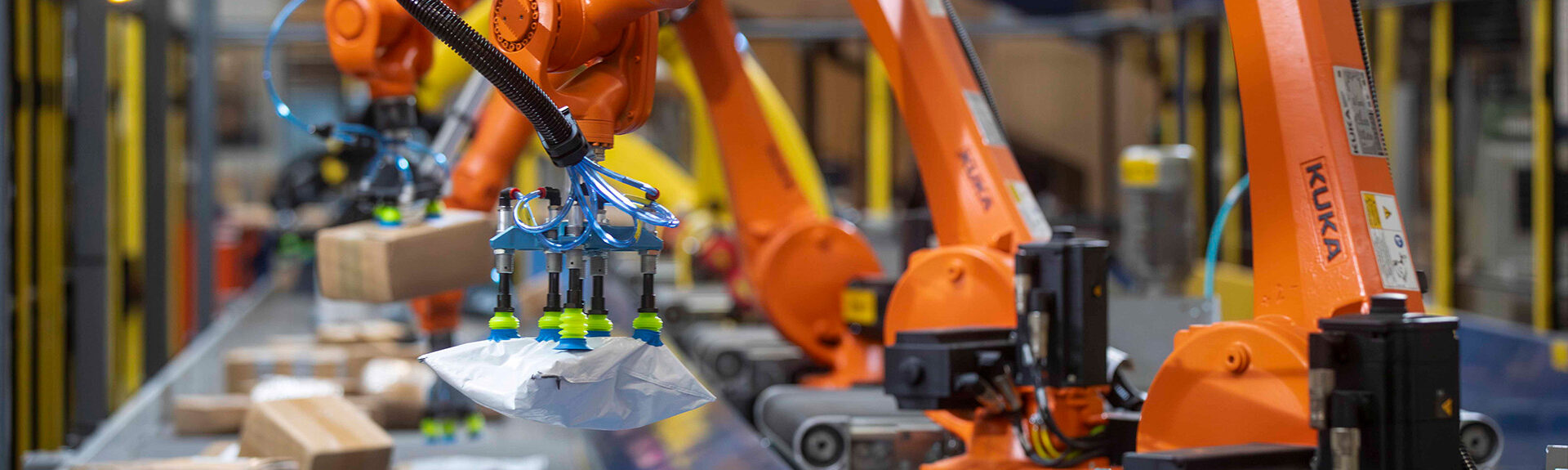
Even in recent years, the development has reached such a speed that robots now exist for many of the smaller processes that are required in the CEP industry, such as robotic tipping arms, robotic pickers, and automated guided vehicles, which perform tasks that usually rely on forklifts, conveyor systems, or manual carts. It’s now much more common for advanced CEP companies with complicated logistical setups to have a variety of different robots working at certain stages of their flow.
Many CEP distributors, including Australia Post, DHL and Royal Mail, now use machine handling robots on a daily basis to optimise their workflows. While the exact setups differ, they are mostly used to automate tasks such as sorting and transporting materials.
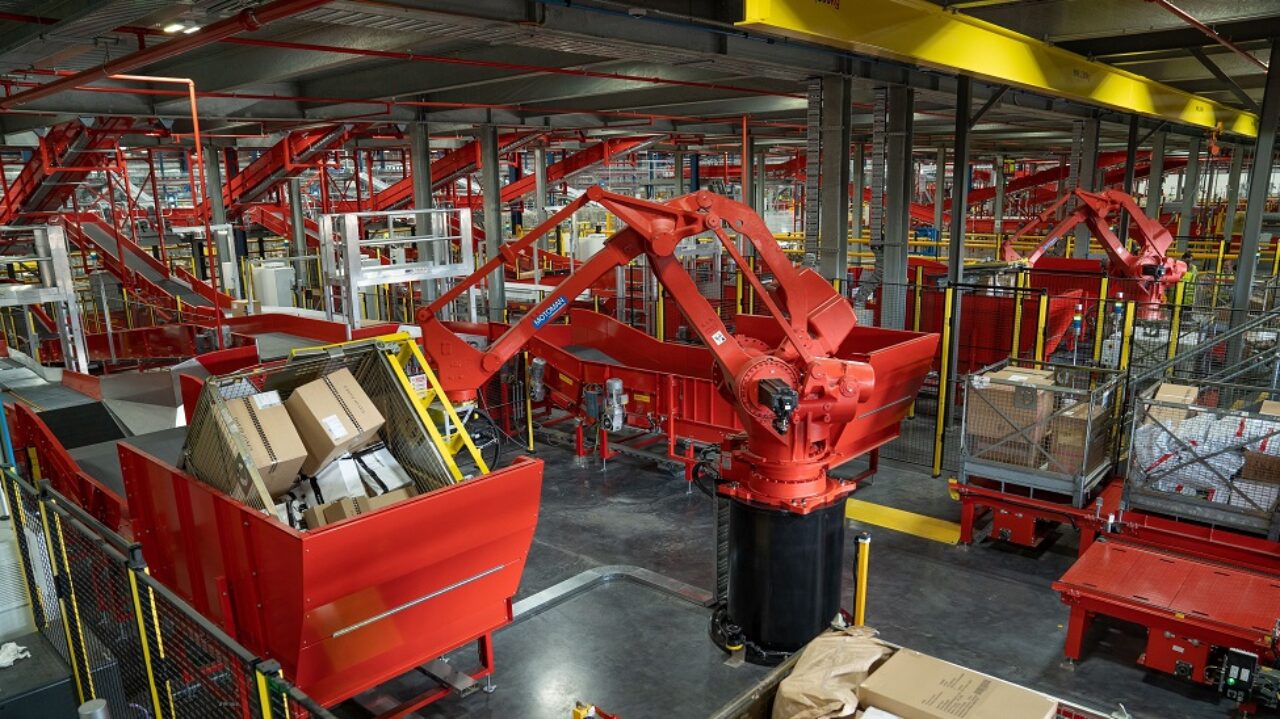
Robots have been developed for many of the processes that occur within CEP logistics, with two main cases including sorting and induction where robots can automatically singulate and induct parcels at high speeds, which improves the initial step where parcels are introduced to the automated sorting systems.
Although there may be a shared futuristic imagination of a scenario where robots are running all operations entirely alone, the industry isn’t quite there yet. However, huge steps have been taken towards a more automated environment and supporting a “lights out” environment which can provide numerous benefits.
Robots offer huge potential to CEP and are already making a difference, however they require very real human strategy and planning. As robots are becoming a part of complex logistical systems, they are not a plug and play solution, but an aid that requires business intelligence, operational knowledge and deep understanding to be implemented correctly.
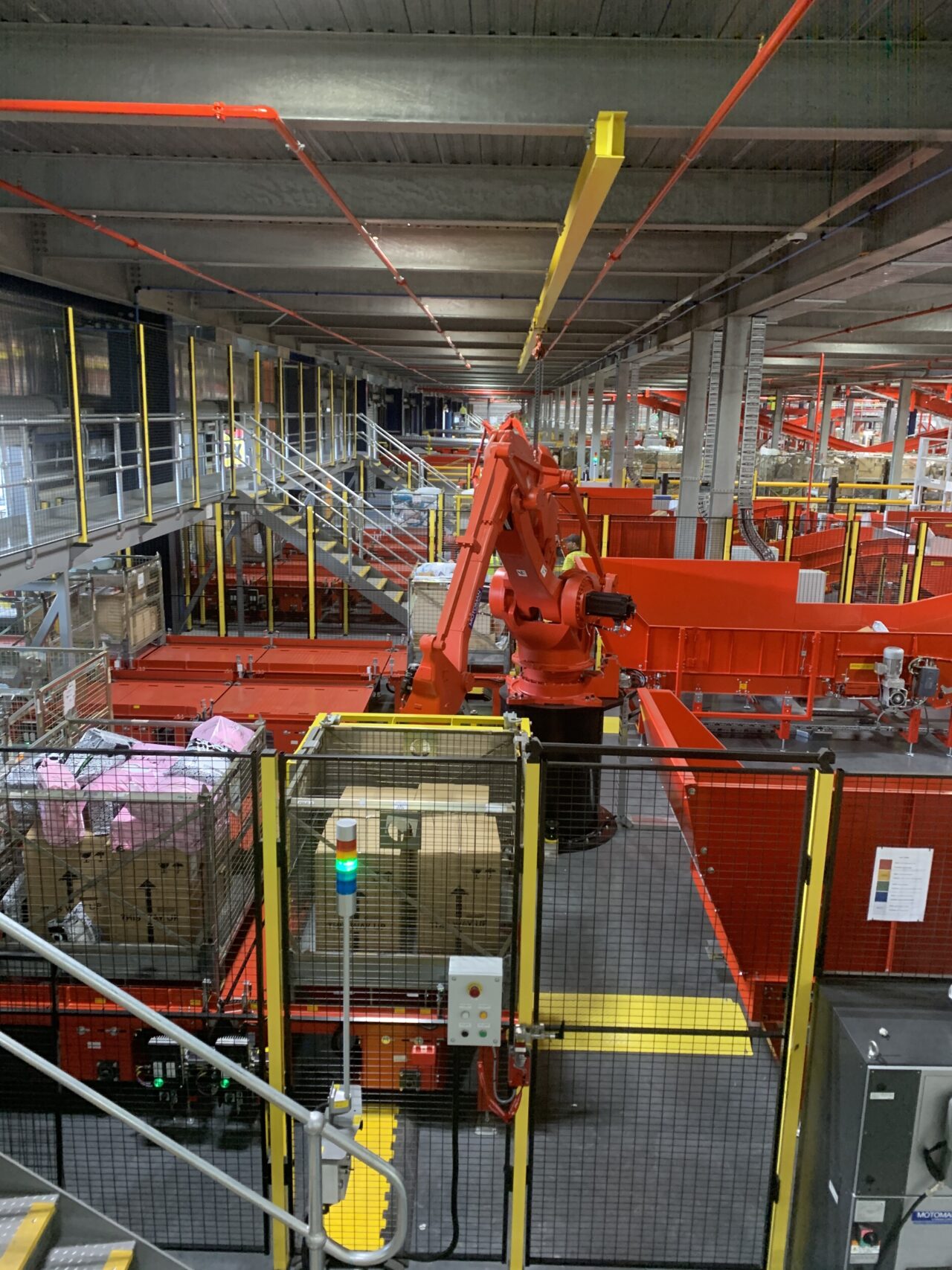
The place in a logistics system where robots are integrated requires careful consideration, including knowledge of the problem or difficulty that the robots should help with, the plan for managing differences in capacity, and the ability to monitor and optimise the robots.
Alongside this, robot solutions require regular maintenance, compliance and cybersecurity regulation, and training for operators in order to fulfil their potential and avoid errors.
However, if integrated with care and if the system supplier recommendations are followed, robots can be extremely beneficial for an automated environment. Their ability to improve workflows, accuracy, labour and coping with demand makes them truly transformative for CEP companies – and they will only continue to become more relevant and more specialised.
While there are extremely clear benefits offered to productivity, work satisfaction, and accuracy, robots are one part of a complex intralogistical setup, rather than the entire system.
After many years of speculation, the CEP industry has seen innovation and robotics make a clear difference with a variety of successful robotic integrating solutions.
Considering the latest developments in AI, these seem likely to continue, with robots of the future better able to use machine learning to optimise workflows even further, possibly with a basis in cloud computing or the internet of things.
The CEP industry is reaping the rewards that these robots are able to offer, while at the same time, a fundamental logistical understanding is required to understand where robots add the most value, how to use them to improve efficiency, and know which situations require different robot customisation.