-
- Industrie-Lösungen
- Flughafen
- Baustoffe
- Zement / AFR
- Chemische Industrie
- Kurier, Express & Paket (KEP)
- E-Commerce
- Minerals & Mining
- Hafentechnik
- Kraftwerke
- Mode
- Konsumgüter
- Einzelhandel
- Metallurgie
- Düngemittelindustrie
IHR PARTNER OF CHOICE Wir sind rund um die Uhr im Einsatz, um Ihr Partner of Choice zu sein.Unser Customer Support ist auf Sie zugeschnitten und bietet mehr als nur den Standard Support. Wir sind bestrebt, eine langfristige und nachhaltige Partnerschaft aufzubauen und Ihnen während des gesamten Lebenszyklus Ihrer Systeme und Anlagen zur Seite zu stehen.Mehr erfahren
 -
- Produkte & Systeme
-
Gepäckförderanlagen
- Gepäckförderanlagen
- Airport Software Suite
- Automatisierter Container-Entlader
- BEUMER autover® unabhängiges Trägersystem
- Baggage Loader – Gepäcklader
- Baggage Manipulator
- Gepäckentlader für Flughäfen (Baggage Unloader)
- CrisBag® Gepäcktransportsystem auf Behälterbasis
- CrisBag® Self Bag Drop – Gepäckaufgabe
- CrisBelt Gepäckförder-System
- CrisCheck® Check-in-Förderer
- CrisClaim® Gepäckausgabe-Karussells
- CrisStore® Rack-basiertes Lagersystem
- Kippschalen-Sortiersystem
-
Logistics Systems Technologie
- Logistics Systems Technologie
-
BEUMER Flow Paket Software-Suite
- BEUMER Flow Paket Software-Suite
- Artikelidentifizierung – Präzision und Effizienzsteigerung gewährleisten
- Steuerung des Materialflusses – Ermöglichen Sie durchgängig Effizienz
- Überwachung – Den vollständigen Überblick haben
- Tools für Wartung und Leistung – Die richtigen Hilfsmittel haben
- Business Intelligenz – Lernen und Planen durch Datenerfassung
- Training – Qualifiziertes und selbstbewusstes Personal schaffen
- Singulator – Automatischer Paketvereinzeler
- BEUMER Kippstation
- BG Line Sorter
- BG Parcel Belt Conveyor – Paket Förderband
- BG Sorter® CB Cross-Belt
- BG Sorter® ET Tilt-Tray
- BG Pouch System
- Fördertechnik
- Tagebautechnik
- Lagerplatztechnik
- Aufbereitungstechnik
- Hafentechnik
- Verlade- & Entladesysteme
- Abfülltechnik
- Palettiertechnik
- Verpackungstechnik
- Customer Support
WHAT IS reverse logistics?
Reverse logistics refers to managing the processing of returned items from the end customer. It covers activities such as returns, repairs, refurbishments, recycling, resale and disposal.
Also known as:
- Returns management
- Aftermarket logistics
- Reverse supply chain
RELATED: Managing returns: How to turn returns into revenue
HOW DOES reverse logistics WORK?
Reverse logistics begins when a customer sends back a product, either because of returns, warranty claims, repairs, or end-of-life recycling.
The process typically involves:
- Returns initiation – customer sends back goods via courier or collection point.
- Receiving and inspection – warehouse staff checks the item’s condition.
- Sorting and disposition – decisions on whether to resell, repair, refurbish, recycle, or dispose of the item.
- Processing and reporting – updating systems, refunding customers, and feeding data into quality control and supply chain planning.
RELATED: Handling the challenges of returns in the e-commerce fashion industry
BENEFITS OF efficient reverse logistics
- Customer satisfaction: Smooth returns process strengthens brand trust and loyalty.
- Cost recovery: Returned items may be refurbished or resold.
- Operational efficiency: Streamlined item handling processes lower handling costs and shorten turnaround times.
REVERSE LOGISTICS VS RETURNS MANAGEMENT
In short, returns management focuses on the immediate return process, while reverse logistics covers the full journey of goods after return.
| Feature | Returns management | Reverse logistics |
|---|---|---|
| Scope | Focused on the immediate customer return process | Covers the entire flow after return, including repair, refurbishment, recycling, or disposal |
| Goal | Quick refunds and customer satisfaction | Value recovery, sustainability, compliance |
HOW BEUMER GROUP SUPPORTS reverse logistics
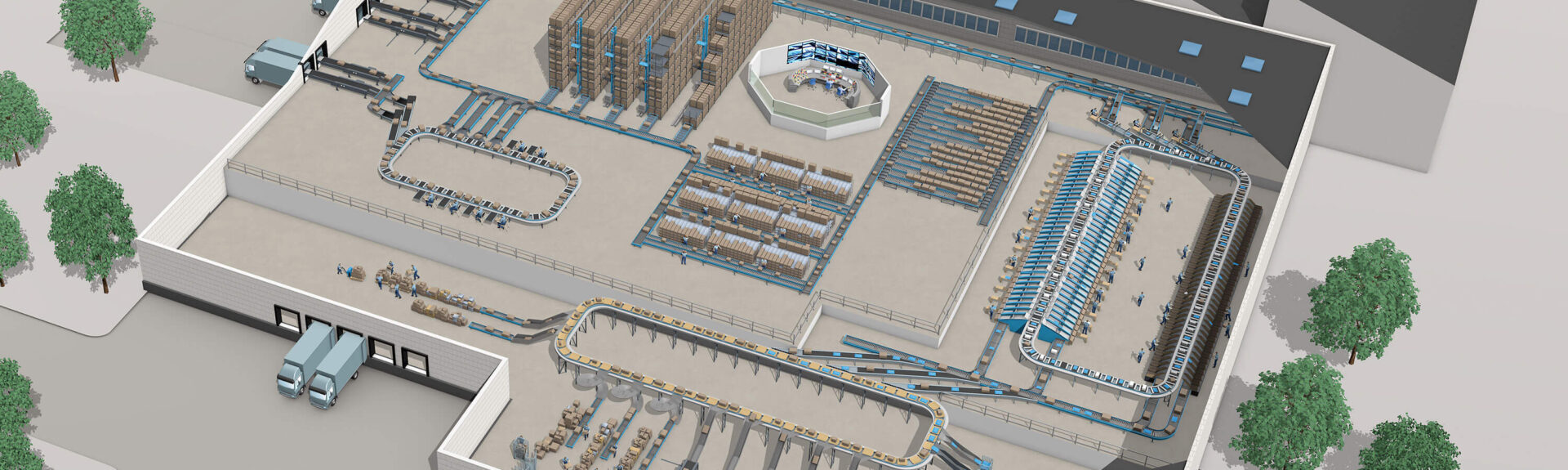
BEUMER Group’s material handling solutions are designed to handle the complexity of reverse logistics just as effectively as forward flows. Our technologies enable businesses to process returns quickly, cost-effectively, and with minimal manual touch and disruption.
As both a supplier and an integrator, our reverse logistics-focused system design include:
- BG Pouch System – ideal for handling unpredictable return volumes by buffering, sequencing, or reintroducing items into stock.
- Loop and line sortation systems – efficient routing of returned goods for inspection, refurbishment, or recycling.
FAQ ABOUT reverse logistics
-
Common examples of reverse logistics include end-users returning items purchased online, recycling end-of-life electronics, or sending faulty products back for repair under warranty.